Bone fractures come in all shapes, depths, and patterns — and so do their treatments. For decades, orthopedic surgeons relied on standard plates and screws to stabilize broken bones. It worked, but not perfectly. Every fracture is slightly different, and an implant designed for a “one-size-fits-all” fixation often leaves surgeons wishing for a bit more flexibility.
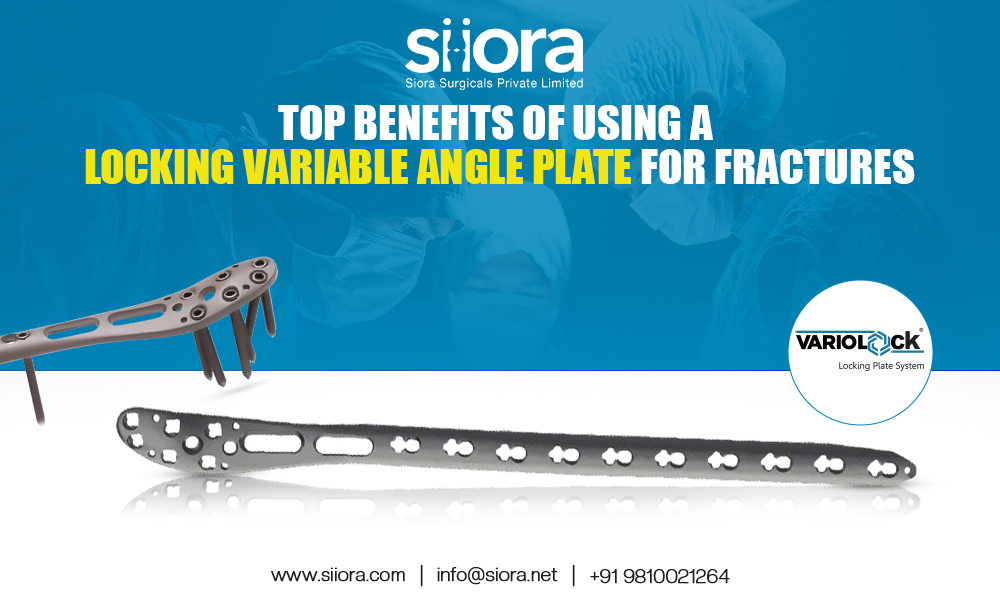
That’s where the locking variable angle plate comes in — a quiet revolution that’s changing how complex fractures are repaired. It brings the precision of modern engineering into the operating room, giving surgeons the freedom to adjust, align, and secure bones exactly the way each patient’s anatomy demands.
A Smart Evolution in Fracture Fixation
Traditional fixation systems depend largely on compression — the screw pulls the plate against the bone surface, which creates some stability. While this method can work well, it has a few limitations. If the bone is fragile, as in elderly patients, or if the fracture involves small pieces that are difficult to compress, the stability suffers.
A locking plate takes a different approach. Its screws physically lock into the plate itself, forming a fixed-angle construct that resists movement even when bone quality is poor. Add “variable angle” locking technology, and you get an even more versatile system — one that lets surgeons place screws at slightly different angles to match the natural contour of the bone or to avoid critical structures like nerves, joints, or previous implants.
The Power of Adjustable Angles
In simple terms, a locking variable angle plate (LVAP) gives surgeons options. Unlike older fixed-angle systems, which forced all screws into pre-set trajectories, variable-angle designs allow fine-tuned adjustments of several degrees per screw hole.
This flexibility makes a big difference during surgery. Imagine repairing a complex distal radius or proximal tibial fracture — areas rich in irregular bone shapes and nearby delicate tissues. A surgeon can now angle each screw exactly where it needs to go, catching the best available bone stock and avoiding sensitive zones. The result: stronger fixation and a better shot at complete healing.
Strength and Stability When It Counts
The mechanical concept behind locking plates is simple yet powerful. When each screw head locks into the plate, the entire construct behaves like an internal frame rather than a clamp. Because the plate doesn’t have to press tightly against the bone surface, the underlying blood supply stays intact. That’s crucial for biologic healing.
With variable-angle systems, surgeons can maintain optimal screw positioning without compromising structural strength. This leads to more stable fixation, especially in osteoporotic bones, multi-fragment fractures, and periarticular regions where traditional plates might fail. The stability also allows for early mobility, which helps prevent joint stiffness and muscle wasting — an enormous practical benefit for patients eager to return to normal life.
Minimally Invasive, Maximally Effective
Locking variable angle plates are often part of modern minimally invasive orthopedic techniques. Through smaller incisions, surgeons slide the plate alongside the bone, then secure it with guided screw placement. This approach means less soft-tissue damage, fewer post-operative complications, and faster recovery times.
Less trauma during surgery translates to faster healing afterward — something every patient appreciates. It’s not unusual for those with LVAP fixation to notice reduced pain and swelling compared with older plate systems.
Designed for Complex Cases
Whether dealing with fractures near joints, in delicate areas like the ankle or wrist, or in bones weakened by osteoporosis, these plates provide reliability that used to be difficult to achieve. Surgeons can adapt the construct to match anatomy and lock screws in multiple directions, essentially customizing the implant for the individual.
In revision surgeries — cases where bones have re-fractured or previous trauma implants have failed — variable-angle plates give surgeons the flexibility to work around existing hardware. That adaptability can mean the difference between another failure and a solid, lasting repair.
A Step Toward Smarter Orthopedics
Every year, orthopedic technology moves a little closer to perfection — tools that respect biology, improve precision, and make recovery quicker. The locking variable angle plate sits at the center of that movement. It’s not just a technical upgrade; it’s an approach that respects both surgeon skill and patient individuality.
By offering strength, flexibility, and biological respect all in one system, these plates have changed the conversation around fracture care. They remind us that healing bones isn’t only about fixing metal to bone — it’s about giving patients the best possible start toward standing, walking, and living freely again.
 siiora surgicals pvt. ltd