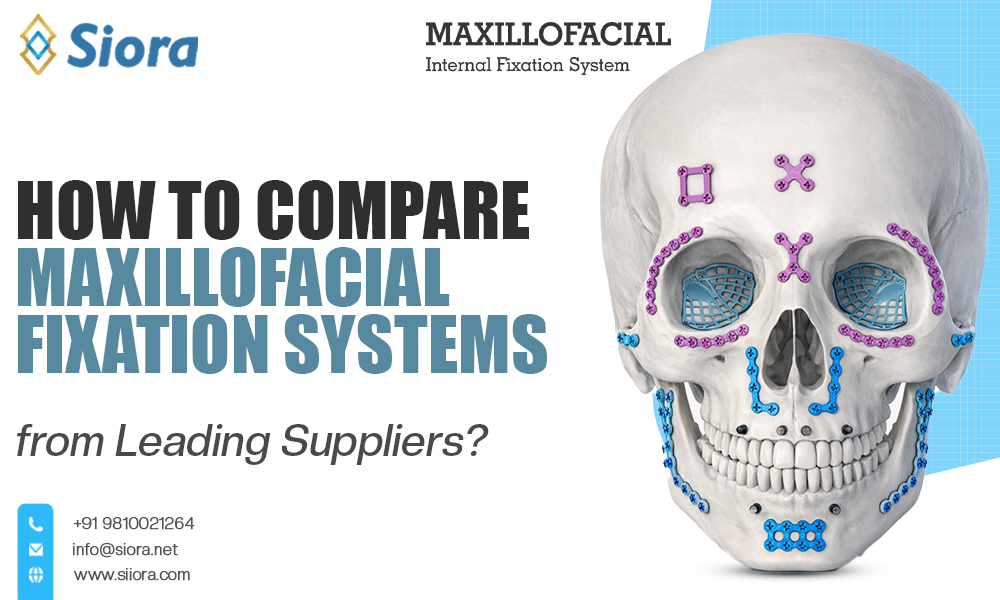
Maxillofacial surgeries require precision, stability, and dependable maxillofacial implants. Whether it is trauma reconstruction, corrective jaw surgery, or facial fracture management, the fixation system plays a major role in the final outcome. Today, surgeons have access to a wide range of maxillofacial fixation systems from different suppliers, but comparing them properly is not always easy.
Many hospitals and surgeons look beyond pricing now. They want systems that offer reliability, easy handling during surgery, and long-term patient safety. That is why choosing the right supplier involves evaluating several important factors rather than selecting the first available option.
Material Quality Matters
One of the first things surgeons usually consider is the material used in the fixation system. Most modern maxillofacial plates and screws are made from titanium because of its strength, corrosion resistance, and compatibility with the human body.
However, not all titanium implants are manufactured with the same level of precision. A high-quality fixation system should have smooth finishing, accurate threading, and consistent dimensions. Poor finishing may affect screw placement or increase tissue irritation after surgery.
Suppliers with strict manufacturing standards often provide better consistency across their product range, which becomes important during complex procedures.
Check the Design and Ease of Use
A fixation system should simplify the surgical procedure, not complicate it. Surgeons often prefer plates that can be contoured easily without losing strength. Low-profile designs are also commonly preferred because they reduce implant prominence under soft tissues.
The screw design is equally important. Self-tapping screws, stable locking mechanisms, and smooth insertion can save valuable operating time. Small details like instrument compatibility and plate adaptability may seem minor at first, but they make a noticeable difference inside the operating room.
Before choosing a supplier, many surgeons evaluate how comfortable the system feels during actual use rather than depending only on brochures or catalogs.
Product Range and Availability
Another important point is the variety of products offered by the supplier. A dependable company should provide systems for different clinical applications, including mandibular fractures, orbital reconstruction, midface fixation, and orthognathic procedures.
Availability also matters. Delays in implant supply can affect surgery schedules and hospital workflow. Suppliers with consistent inventory and strong distribution networks are generally more reliable for long-term collaboration.
Regulatory Certifications and Standards
Experienced buyers usually pay close attention to certifications. International quality certifications such as ISO and CE markings indicate that the implants meet recognized safety and manufacturing standards.
Although certifications alone do not guarantee surgical success, they do provide confidence regarding material quality and production processes.
Surgeon Support and Technical Assistance
Good supplier support often becomes valuable during difficult cases. Some manufacturers provide surgical guidance, product training, or quick technical assistance when required. This level of support helps surgeons understand the system better and use it more efficiently.
Companies that maintain professional communication and after-sales service are often preferred over suppliers that focus only on selling products.
Final Thoughts
Comparing maxillofacial fixation systems is not just about cost. Surgeons and healthcare providers should carefully review material quality, trauma implant design, ease of handling, certifications, product availability, and supplier support before making a decision.
A well-designed fixation system can improve surgical efficiency and patient outcomes at the same time. Choosing the right supplier may take extra effort initially, but it often leads to better long-term reliability inside the operating room.
 siiora surgicals pvt. ltd